Traductor Scriptor
The Old Greek Translation of Exodus 1-14 as Scribal Activity
John Screnock, University of Oxford
In Traductor Scriptor, John Screnock situates the Old Greek translation of the Hebrew Bible within the broader scribal culture of the ancient world. Building on current methods in Septuagint studies and textual criticism, Screnock engages the evidence from Qumran, the Samaritan Pentateuch, and the Old Greek to argue that the phenomena of translation and transmission are fundamentally similar. Traductor Scriptor presents a unique approach to the use of the Old Greek for textual criticism of the Hebrew Bible, based on new theoretical considerations and an in-depth analysis of text-critical data in the Old Greek translation and Hebrew manuscripts of Exodus 1–14.
Sunday, September 11, 2016
Screnock, Traductor Scriptor
NEW BOOK FROM BRILL:


Krzysztof Ulanowski (ed.), The Religious Aspect of Warfare in the Ancient Near East, Greece and Rome
NEW BOOK FROM BRILL:
The Religious Aspects of War in the Ancient Near East, Greece, and RomeOnly one of the essays is specifically about ancient Judaism, but many of them are also of background interest.
Ancient Warfare Series Volume 1
Krzysztof Ulanowski, Gdańsk University
The Religious Aspect of Warfare in the Ancient Near East, Greece and Rome is a volume dedicated to investigating the relationship between religion and war in antiquity in minute detail. The nineteen chapters are divided into three groups: the ancient Near East, Greece, and Rome. They are presented in turn and all possible aspects of warfare and its religious connections are investigated. The contributors focus on the theology of war, the role of priests in warfare, natural phenomena as signs for military activity, cruelty, piety, the divinity of humans in specific martial cases, rituals of war, iconographical representations and symbols of war, and even the archaeology of war. As editor Krzysztof Ulanowski invited both well-known specialists such as Robert Parker, Nicholas Sekunda, and Pietro Mander to contribute, as well as many young, talented scholars with fresh ideas. From this polyphony of voices, perspectives and opinions emerges a diverse, but coherent, representation of the complex relationship between religion and war in antiquity.
The Canaanites
ASKING THE IMPORTANT QUESTIONS: Who Were the Canaanites? (Owen Jarus, Live Science). Discusses the pre-biblical and biblical evidence for the Canaanites, but stops short of the Phoenicians and Carthaginians. Goes well with Jarus's earlier brief history of ancient Israel and brief history of ancient Egypt.
Saturday, September 10, 2016
Huqoq mosaic published
NATIONAL GEOGRAPHIC: Explore This Mysterious Mosaic—It May Portray Alexander the Great. A decorated floor uncovered in the buried ruins of an ancient synagogue in Israel may depict a legendary meeting with the famous conqueror (A. R. Williams).
After several years of digging and study, archaeologists are revealing an extraordinary—and enigmatic—mosaic discovered among the ruins of a Roman-era synagogue at a site in Israel known as Huqoq. Nothing like it has come to light in any other building yet known from the ancient world, experts say.It's hard enough to interpret ancient inscriptions, but interpreting ancient uninscribed decorative art is a whole other level of challenge. In this case other specialists have a completely different interpretation of the mosaic:
The scene includes elephants outfitted for battle—a detail that immediately suggests the story of the Maccabees, Judean leaders who mounted a revolt against the Seleucid Empire in the mid-second century B.C. The Seleucids, who were descendants of one of Alexander the Great’s generals, are famed for including elephants in their armies.
But excavation director Jodi Magness, an archaeologist at the University of North Carolina, Chapel Hill, has a different interpretation. She believes the leader of the army is none other than Alexander the Great himself. His meeting with the high priest of Jerusalem never happened, but it was a piece of historical fiction that would have been very familiar to the residents of ancient Huqoq. ...
[...]
[Karen] Britt, the art historian, agrees with Magness that the mosaic tells a story that would have held great meaning for ancient synagogue-goers. But she has come up with a different theory about what that story might be—a situation that’s not unusual as members of a research project consider the evidence from different points of view.I've heard that at least one peer-review publication on the mosaic is coming, and doubtless there will be more. Meanwhile, this article provides a good photo that specialists can start working on:
Britt and Ra’anan Boustan, a UCLA history of religion specialist who’s also [like Britt] a member of the excavation team, have spent the past two years consulting ancient literature, considering scenes of similar figures in ancient art, and visiting the ruins of synagogues around the Sea of Galilee.
They interpret the mosaic as the depiction of a Seleucid attack on Jerusalem led by King Antiochus VII (pronounced an-TIE-oh-cuss) in 132 B.C.
[...]
“I think you could make the case for a number of different interpretations,” says Magness. With the mosaic now revealed, and the likely possibilities outlined, she expects the debates to begin.Background on this particular mosaic from Huqoq is here and here. Follow the background links for some of the other ancient mosaics that have been found at the same site. And for a more recently discovered mosaic, again at Huqoq, see here.
Gray on charity in the rabbinic texts
ANCIENT JEW REVIEW: Reading Charity Texts: On Intertextuality and Social History (Alyssa Gray).
In sum, the scholar of rabbinic charity requires ongoing methodological self-awareness. Care in gathering and systematizing texts, focused and detailed analyses of discrete topics, use of source-, form-, and redaction-criticism (especially of the Bavli), attention to intertextuality and the literary nature of rabbinic texts, and drawing meaningful and restrained conclusions, are all desiderata. The reward for these methodological pains will be a better and richer understanding of this fascinating topic.
Religion before "Religion"
CONFERENCE: Religion Before "Religion." October 14 and 15, 2016, Bowdoin College, Brunswick Maine.
The overarching aims of the symposium are twofold, and participants will be invited to address one or both of the following topics: First, we will discuss how to define religion practices and understandings involving gods and similar beings that were widespread in the Greco-Roman world, and with a view to pre-Christian writings that sought to impose normative schemes upon these practices. Then, we will consider why and how Christians and Jews gave rise to entities that resemble “religions” in a more modern sense, largely through efforts of mutual differentiation and institutionalization.Follow the link for more details, a schedule, a list of participants, and abstracts of the papers.
Ancient tattoos
SKIN ART: Tattoo Taboo? Exploring The History Of Religious Ink And Facial Tattoos (Forbes). Dr. Sarah Bond of the University of Iowa gives a brief overview of the history of tattoos in Western antiquity. The following is of interest for PaleoJudaica:
Within ancient near eastern civilizations, the body had also long served as a surface for advertising mourning and religious affiliations. As Jordan Rosenblum, a professor of religious and Jewish studies at the University of Wisconsin at Madison, told me, this was true within Judaism as well. He notes that despite the oft-uttered belief that tattooed Jews cannot be buried in a Jewish cemetery, there is a long history of tattoos within the faith. Leviticus 19.28 indeed prohibits the “gashing of the flesh,” however, tattoos appear to have been used among some Jews in the ancient Near East as a symbol of mourning the passing of loved ones.Relevant past PaleoJudaica posts have been mostly on modern tattoos involving ancient languages and themes. Often these do not turn out well. Background here and links.
What Larry Schiffman is reading
INTERVIEW: On the Bookshelf (Elliot Resnick, Jewish Press).
Professor Schiffman is lecturing at Missouri State University this weekend.
Lawrence Schiffman is a professor at New York University, an expert on the Dead Sea Scrolls and Second Temple era, and the author and editor of over a dozen works.He gives us an impressive lineup of books in his reading list.
Professor Schiffman is lecturing at Missouri State University this weekend.
Friday, September 09, 2016
A Jewish epitaph from third-century CE Egypt
EPIGRAPHY: BYU professor works with University of Utah library to translate 1700-year-old obituary. Ancient epitaph memorializes Helene, a woman with unique Jewish and Christian titles who loved orphans (Jon McBride, BYU News).
“I’ve looked at hundreds of ancient Jewish epitaphs,” [Professor Lincoln H.] Blumell said, “and there is nothing quite like this. This is a beautiful remembrance and tribute to this woman.”Seen on Facebook. The provenance doesn't look very clear to me, so I would like to know more about the authentication of the object. But that doubtless is covered in the formal peer-review publication in the Journal for the Study of Judaism, which is not yet available to me. But this looks to be an important discovery that gives us some intriguing information about religious identity in Egypt after the Jewish revolt.
While Helene is identified as Ἰουδαία (a Jew), she is also referred to as Ἄμα (Ama), a title that is used only for nuns and other certain Christian women in late antique Egypt.
This inscription also helps to identify the Jewish community in Egypt in the period after the deadly Jewish revolt of A.D. 115–117 when the Jewish community was decimated. It is estimated that this was written some time in the A.D. 200s.
Review of Cronin, "Raymond Brown, ‘The Jews’ and the Gospel of John"
READING ACTS: Book Review: Sonya Shetty Cronin, Raymond Brown, ‘The Jews’ and the Gospel of John: From Apologia to Apology; LNTS 504 (Phil Long).
Cronin, Sonya Shetty. Raymond Brown, ‘The Jews’ and the Gospel of John: From Apologia to Apology. LNTS 504; London: T&T Clark, 2015. 232pp. Hb; $112.00; Pb. $39.95 (2013); PDF eBook $27.95.Excerpt:
In the end, Cronin shows how Brown was able to move from only the most cursory interest in anti-Judaism in the Gospel of John to a defense of John’s gospel against the charge of anti-Judaism, and ultimately to an apology for the way John’s gospel has been used against the Jewish people in both scholarship and society. Brown did this, Cronin argues, first as a Catholic and secondly as a biblical scholar. Brown was, she suggests, a leader in the Church against anti-Judaism and a “significant voice in leadership” forming official Catholic documents and statements on the Jewish people.
Video of 17th Annual Megalim Archaeology Conference
ARCHAEOLOGY: Watch: 17th Annual Archaeological conference.Leading archaeologists speak about recent findings, with special focus on attempts by various entities to erase Jewish history. Note: Video part Hebrew part English (Arutz Sheva).
This year, in addition to highlighting the newest archaeological discoveries in the City of David and ancient Jerusalem, the conference will focus on the attempt of various entities to erase ancient Jerusalem from Jewish history.Follow the link for the video. Among the discoveries discussed are the floor-tiles attributed to the Herodian Temple courtyards which the Temple Mount Sifting Project has recently made public. Background here and links.
[...]
"The Inn at Lydda" opens
NEW TESTAMENT APOCRYPHA WATCH. The Inn At Lydda has opened at the Sam Wanamaker Playhouse, London, to unenthusiastic reviews:
The Telegraph: The Inn at Lydda's biblical drama collapses into Carry On comedy – review (Chris Bennion).
The Guardian: The Inn at Lydda review – Christ is risen for a showdown with Caesar (Michael Billington).
The Telegraph: The Inn at Lydda's biblical drama collapses into Carry On comedy – review (Chris Bennion).
Now, how are you on your New Testament apocrypha? Ah, good. You’ll be aware then of the fleeting reference in one such pseudo-gospel to Tiberius Caesar seeking out the healing powers of Jesus of Nazareth. Sadly for the ailing Roman emperor, Pontius Pilate’s hands were squeaky clean by this point and the two men never met.Plus the reviewer didn't like the hand puppet.
John Wolfson, playwright and, perhaps more importantly, the Curator of Rare Books at the Globe, has imagined that the meeting took place. It is a crackerjack set-up: Jesus, fresh from the cross, must decide whether to save the life of the Emperor under whose vicious tyranny he has just been executed. Would he “heal Caesar”?
While there is much invention, humour and good intention in Andy Jordan’s production, what we are served up is a haphazard mishmash of droll Bible history, quasi-Shakespearean high drama and Carry on Cleo.
[...]
The Guardian: The Inn at Lydda review – Christ is risen for a showdown with Caesar (Michael Billington).
The play is deeply flawed but, at a time when drama is monotonously secular, it at least has the courage to remind us there is a world elsewhere.The Financial Times: The Inn at Lydda, Sam Wanamaker Playhouse, London — review. An audacious, fitfully successful staging of a New Testament story (Sarah Hemming).
But, for all this, the play’s idiosyncratic approach doesn’t really gel and ultimately, frustratingly, undermines the potential scope of the subject.The Arts Desk: The Inn At Lydda, Sam Wanamaker Playhouse. A clever concept loses its way in this uneven new play (Alexandra Coghlan).
Wolfson wants to use his material to discuss a number of big questions. The nature of history and history-writing, the Bible as literature, the corrupting influence of power and the philosophy of governance all come in for comment, and in the encounter between Caesar and Jesus we do start heading towards some interesting conclusions. But no sooner has the play chosen a compelling path than it abandons it, leaving us lost and languishing at a second-rate inn somewhere in the Judean desert.Background here. Cross-file under Theatre.
The Shohet Scholars Program
INTERNATIONAL CATACOMB SOCIETY: Research Fellowship Opportunity: 2017-2018 Shohet Scholars (Deadline 15 January 2017).
The Shohet Scholars Program desires to support scholars of demonstrated promise and ability who are judged capable of producing significant, original research in the fields of archeology, art history, classical studies, history, comparative religions, or related subjects. The work need not focus explicitly on the Roman catacombs, but it should be within the sphere of the Mediterranean world from the late Hellenistic Period to the end of the Roman Empire. Of special interest are interdisciplinary projects that approach traditional topics from new perspectives.Seen on Facebook. Follow the link for further particulars.
Thursday, September 08, 2016
Pehlivanian et al. (eds.), Orientalische Bibelhandschriften aus der Staatsbibliothek zu Berlin
BIBLIOGRAPHIA IRANICA: Pahlavi and Judeo-Persian Bible Manuscripts. Notice of a new book: Pehlivanian, Meliné, Christoph Rauch & Ronny Vollandt (eds.). 2016. Orientalische Bibelhandschriften aus der Staatsbibliothek zu Berlin – PK. Eine illustrierte Geschichte. Wiesbaden: Reichert Verlag.
For past PaleoJudaica posts on Judeo-Persian, see here and links. The scope of this volume seems to be considerably wider, though. See the description at the link.
For past PaleoJudaica posts on Judeo-Persian, see here and links. The scope of this volume seems to be considerably wider, though. See the description at the link.
On linguistic dating of biblical Hebrew
THE BIBLE AND INTERPRETATION:
Biblical Hebrew Changed, but How?The BAR article by Hurvitz, which is behind a subscription wall, was noted here last week.
In a hot-off-the-press popular article in Biblical Archaeology Review (September/October 2016), Avi Hurvitz discusses “How Biblical Hebrew Changed.” It is certainly true that Biblical Hebrew evolved over time, but the particulars of how that happened are more complex and debated than Hurvitz acknowledges. The example that he discusses, ʾiggeret and sēfer for “letter,” is a case in point.
See Also: Linguistic Dating of Biblical Texts
A Very Tall “Cautionary Tale”: A Response to Ron Hendel
An Unsettling Divide in Linguistic Dating and Historical Linguistics
By Robert Rezetko
Research Associate
Radboud University Nijmegen & University of Sydney
September 2016
CFP: 17th World Congress of Jewish Studies
H-JUDAIC: CFP: The Seventeenth World Congress of Jewish Studies.
Call for PapersThe deadlines are in November of 2016. Follow the link for further particulars.
The Seventeenth World Congress of Jewish Studies
We are happy to announce that the SeventeenthWorld Congress of Jewish Studies will take place at the Hebrew University in Jerusalem, August 6 - 10, 2017. The Congress will mark 70 years since the First World Congress of Jewish Studies. Scholars from all fields of Jewish Studies are invited to submit proposals for papers and sessions to be presented at the Congress. We particularly encourage proposals for complete sessions.
The Congress program has six divisions:
The Bible and Its World; History of the Jewish People; Rabbinic Literature, Jewish Law and Jewish Thought; Languages, Literatures, and the Arts; Contemporary Jewish Society; Research Projects and Technology.
The Academic Committees of the Congress divisions are responsible for accepting or rejecting the proposed lectures and sessions.
[...]
Anton event in Santa Monica
FIFTY SHADES OF TALMUD: Iconic L.A. Author to Discuss Sex and the Talmud at Jewish Women's Theatre on September 25 (BroadwayWorld.com).
Maggie Anton, author of the popular Rashi's Daughter series, will discuss her latest book, 50 Shades of Talmud: What the First Rabbis Had to Say about You Know What, at Jewish Women's Theatre's popular Bagels & Bestsellers author-brunch series on Sunday, September 25 at 10:30 a.m. @ The Braid, 2912 Colorado Avenue #102 in Santa Monica.There's lots more on Maggie Anton and her books here and links.
Maggie Anton's latest book mixes Talmudic discussions with cartoons and observations by both serious and comedic thinkers, to provide audiences with a new and rather shocking perspective on what the Talmudic sages have to say about the most intimate of human experiences.
[...]
Ancient stable excavated at Ovdat
ARCHAEOLOGY: 1500 year old stables discovered at Ovdat National Park. In archaological excavations at Ovdat National Park an ancient animal stable has been uncovered (Yoel Domb, Arutz Sheva).
The site of Ovdat (Avdat) has been mentioned before at PaleoJudaica here and links.
In archaeological excavations at Ovdat conducted by the Antiquities authority and DePaul University and funded by a Fulbright scholarship, members of the Negev Mountain Field School discovered a meter-thick layer in a structure which confirmed unequivocally that sheep and donkeys had existed here in ancient periods.A layer of animal dung, that is. That's pretty unequivocal.
[...]
The site of Ovdat (Avdat) has been mentioned before at PaleoJudaica here and links.
Wednesday, September 07, 2016
More on those floor tiles
TEMPLE MOUNT WATCH: Yesterday the Temple Mount Sifting Project announced that they have recovered and reconstructed ancient tiles which they are confident paved the courtyards of the Herodian Temple. This story has received some attention from the media. Here are some of the articles:
Jerusalem Biblical Temple floor designs 'restored' (BBC)
Archaeologists Restore Second Temple Flooring From Waqf's Trash (Nir Hasson and Ruth Schuster, Haaretz)
Archaeologists restore ancient tiles from Second Temple in Jerusalem (Daniel K. Eisenbud, Jerusalem Post)
Reader Yoel also has pointed me to this video on the story (in Hebrew).
Also, the Temple Mount Sifting Project Blog notes the following: The Sifting Project and the Temple Denial at Megalim Conference.
Background to the story is here. There are many, many past posts on the Temple Mount Sifting Project. Start here and just keep following those links, or run the phrase through the blog search engine.
Jerusalem Biblical Temple floor designs 'restored' (BBC)
Archaeologists Restore Second Temple Flooring From Waqf's Trash (Nir Hasson and Ruth Schuster, Haaretz)
Archaeologists restore ancient tiles from Second Temple in Jerusalem (Daniel K. Eisenbud, Jerusalem Post)
Reader Yoel also has pointed me to this video on the story (in Hebrew).
Also, the Temple Mount Sifting Project Blog notes the following: The Sifting Project and the Temple Denial at Megalim Conference.
On Thursday, September 8th, our project is making a splash at this year’s Megalim Conference focusing on Temple Denial. This is followed by a sifting demonstration and the opportunity for conference participants to sift buckets of earth from the Temple Mount. Afterward, Zachi Dvira will lecture about the archaeological evidence from the Temple Mount from the First and Second Temples and Frankie will speak about her research about the Herodian Temple Mount floors.The conference will be live-streamed with English translation. Follow the link for details.
Background to the story is here. There are many, many past posts on the Temple Mount Sifting Project. Start here and just keep following those links, or run the phrase through the blog search engine.
Coptic post
ALIN SUCIU: Job Opening for the Project Katalogisierung der Orientalischen Handschriften in Deutschland/Cataloguing of Oriental Manuscripts in Germany. The fixed-term job involves: "Catalogisation of Coptic manuscripts, ostraca and papyri from German collections, chiefly from the Egyptian Museum and Papyrus Collection Berlin, in an online database." The application closing date is 30 September 2016 and they aim to have someone in the post by 15 October 2016 or as soon as possible thereafter. Follow the link for further particulars. Don't dawdle!
2 Baruch 52-73, 73-76 (77-87)
READING ACTS continues its series on 2 Baruch, with two more posts:
A Vision of Many Waters – 2 Baruch 52-73
Eternal Peace – 2 Baruch 73-76
Despite it's title, the latter post also summarizes most of the rest of the book (chapters 77-87, the Epistle of Baruch). I do not know whether that is the final post in the series on 2 Baruch.
Past posts in the series are noted here and links.
Cross-file under Old Testament Pseudepigrapha Watch.
A Vision of Many Waters – 2 Baruch 52-73
Eternal Peace – 2 Baruch 73-76
Despite it's title, the latter post also summarizes most of the rest of the book (chapters 77-87, the Epistle of Baruch). I do not know whether that is the final post in the series on 2 Baruch.
Past posts in the series are noted here and links.
Cross-file under Old Testament Pseudepigrapha Watch.
Schiffman lecturing at Missouri State
MISSOURI STATE NEWS: Prominent Jewish studies professor to deliver free public lecture. Plenary speech to discuss the Bible, Dead Sea Scrolls.
Missouri State University will get a glimpse into the world of Biblical archaeology with an “Indiana Jones flair” when Jewish studies scholar Dr. Lawrence H. Schiffman visits campus later this month.The article includes an audio interview with Dr. Vadim Putzu, assistant professor of religious studies at Missouri State University. PaleoJudaica frequently links to posts at Professor Schiffman's blog.
Schiffman, one of the most prominent and influential experts on the Dead Sea Scrolls, will give a free public lecture as part of the Midwest Jewish Studies Association Conference on Sept. 11.
Schiffman is currently the Judge Abraham Lieberman Professor of Hebrew and Judaic Studies at New York University and serves as the director of the Global Institute for Advanced Research in Jewish Studies. He has previously served as the vice provost for undergraduate education at Yeshiva University and has been featured in multiple PBS, BBC and Discovery documentaries.
[...]
qayits
YONA SABAR: Hebrew word of the week: qayits.
The Hebrew names of the seasons are associated with farming life, as aviv “spring” originally meant “green ears of corn” (Leviticus 2:14) and qayits “summer” meant “cutting, harvesting ripe fruits,” especially figs (Jeremiah 40:10, 12; Isaiah 28:4).
[...]
Tuesday, September 06, 2016
Floor tiles from the courtyard of Herod's Temple?
TEMPLE MOUNT SIFTING PROJECT BLOG PRESS RELEASE: For the First Time, Archeologists Restore Flooring from Second Temple Courtyard in Jerusalem.
Cross-file under Temple Mount Watch. And watch this space.
The press release includes the following photographs, with the indicated captions. Click on any image for a larger version.

Herodian Opus Collection

איור [UPDATE [7 September]: The woman in the photo is Frankie Snyder.)

8-Pointed-Star Module no border

Banias 8-pt-star Module no border

Q2SQ Module

Q3SQ Module

Q4 Module

QOM Module no border

Zigzag Module
HT to Joseph Lauer for alerting me to the story when it was upcoming.
UPDATE (7 September): More here.
JERUSALEM, September 6th, 2016 — Archeologists from the Jerusalem-based Temple Mount Sifting Project are confident that they have successfully restored a unique architectural element of the Second Temple. Namely, a series of regally decorated floor tiles that adorned the porticos atop the Temple Mount, and which likely featured prominently in the courtyards of the Second Temple during the period that King Herod ruled (37 to 4 BCE) in Jerusalem.These tiles have come up before from time to time and I discussed them a bit in 2010 in the post Temple Mount denial and Terrible Ice. But the work on them now seems to be more advanced and potentially very important. As always with such things, the results still need to be fully published in a peer-review venue with a clear account of how the fragments were recovered and of the methodology used to reconstruct them. It's a truism that the architecture of the Jewish temples on the Temple Mount has virtually entirely been destroyed (although the Temple Platform does survive). Although reconstructing the tiles that decorated the Temple courtyard is not reconstructing the architecture, it would be at least moving in that direction. Exciting times.
“It enables us to get an idea of the Temple’s incredible splendor,” stated Dr. Gabriel Barkay, co-founder and director of the Temple Mount Sifting Project. The restored tiles will be presented to the general public on September 8th, at the 17th Annual City of David Archaeological Conference. “This represents the first time that archeologists have been able to successfully restore an element from the Herodian Second Temple complex,” stated Zachi Dvira, co-founder and director of the Temple Mount Sifting Project.
[...]
Frankie Snyder, a member of the Temple Mount Sifting Project’s team of researchers and an expert in the study of ancient Herodian style flooring, succeeded in restoring the ornate tile patterns “using geometric principles, and through similarities found in tile design used by Herod at other sites,” said Snyder, who has an academic background in mathematics and Judaic Studies. “This type of flooring, called ‘opus sectile,’ Latin for ‘cut work,’ is very expensive and was considered to be far more prestigious than mosaic tiled floors.”
“So far, we have succeeded in restoring seven potential designs of the majestic flooring that decorated the buildings of the Temple Mount,” said Snyder, explaining that there were no opus sectile floors in Israel prior to the time of King Herod. “The tile segments were perfectly inlaid such that one could not even insert a sharp blade between them.”
To date, approximately 600 colored stone floor tile segments have been uncovered, with more than 100 of them definitively dated to the Herodian Second Temple period. This style of flooring is consistent with those found in Herod’s palaces at Masada, Herodian, and Jericho among others, as well as in majestic palaces and villas in Italy, also attributed to the time of Herod. The tile segments, mostly imported from Rome, Asia Minor, Tunisia and Egypt, were created from polished multicolored stones cut in a variety of geometric shapes. A key characteristic of the Herodian tiles is their size, which corresponds to the Roman foot, approximately 29.6 cm.
[...]
“Now, as a result of Frankie Snyder’s mathematical skills, we have succeeded in recreating the actual tile patterns. This represents the first time that we can see with our own eyes the splendor of the flooring that decorated the Second Temple and its annexes 2,000 years ago,” stated Dr. Gabriel Barkay, co-founder and director of the Temple Mount Sifting Project. “Referring to the Temple that Herod built, the Talmud says that ‘Whoever has not seen Herod’s building has not seen a beautiful building in his life’. Though we have not merited seeing the Temple in its glory, with the discovery and restoration of these unique floor tiles, we are now able to have a deeper understanding and appreciation for the Second Temple, even through this one distinctive characteristic.”
[...]
Cross-file under Temple Mount Watch. And watch this space.
The press release includes the following photographs, with the indicated captions. Click on any image for a larger version.

Herodian Opus Collection

איור [UPDATE [7 September]: The woman in the photo is Frankie Snyder.)

8-Pointed-Star Module no border

Banias 8-pt-star Module no border

Q2SQ Module

Q3SQ Module

Q4 Module

QOM Module no border
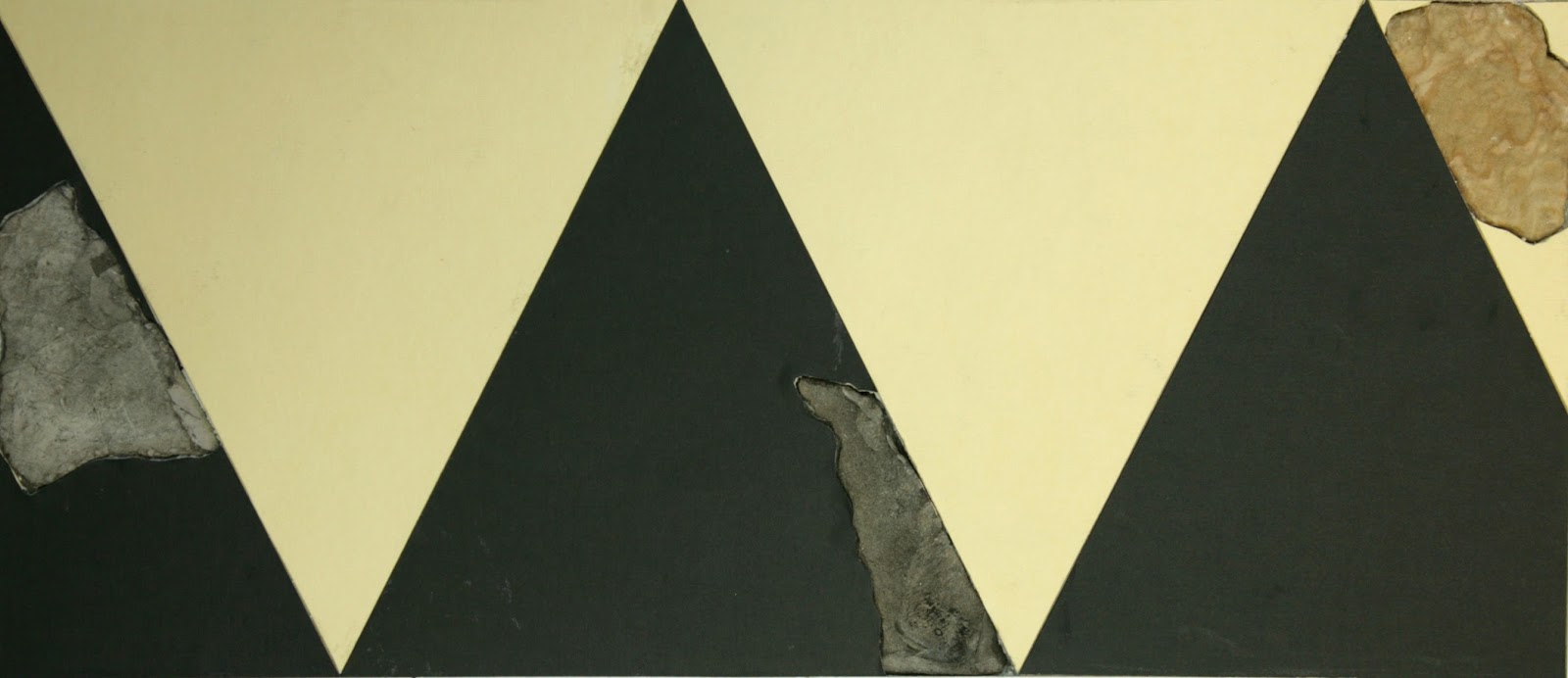
Zigzag Module
HT to Joseph Lauer for alerting me to the story when it was upcoming.
UPDATE (7 September): More here.
Italian AISG Conference
CONFERENCE: Program of the international conference of the Italian (AISG) Association for Jewish Studies, on the Discovery of the Qumran scrolls on the coming 70 anniversary (1947-2017) and on the Torah Scroll of Bologna, Biblioteca Universitaria, September 20 (Ravenna) and 21-22 (Bologna) (Mauro Perani, Academia.edu).
Babelao latest
ETC BLOG: 3 new articles in BABELAO 5 (2016) (Peter Williams). The articles involve biblical manuscripts in Greek, Ethiopic, and Hebrew, and related scribal activity.
The newish free electronic journal Babelao has also been mentioned recently by the AWOL Blog, and I noted it back in 2015.
The newish free electronic journal Babelao has also been mentioned recently by the AWOL Blog, and I noted it back in 2015.
Zürich New Testament Blog
ASSIMILATED TO THE BLOGOSPHERE: Zürich New Testament Blog. The first post is Bridging the German-English Divide. Christoph Heilig received a Master's degree here at the Divinity School of the University of St. Andrews some years ago. His recent book with Mohr Siebeck, Hidden Criticism? The Methodology and Plausibility of the Search for a Counter-Imperial Subtext in Paul, was noted here.
Weni Widi Wiki!
NATIVLANG: What Latin Sounded Like - and how we know.
HT James McGrath. Entertaining and informative, if sometimes a bit technical for non-specialists. This looks like an interesting YouTube channel worth keeping an eye on.
As with Latin, we know a fair bit through various indirect means about the original pronunciation of Hebrew. It was quite different from both the medieval Masoretic pronunciation and the modern Israeli pronunciation. Philologists have even been able to reconstruct a good bit of information about the pronunciations of ancient Phoenician and Ugaritic, again by means of indirect inferences like the ones mentioned in the video for Latin. These include comparison with the pronunciations of later Semitic languages, hints within the phonology inherent in the ancient alphabets, and transliterations in other languages such as Akkadian, Greek, and Latin. Reconstructions of ancient Northwest Semitic languages (Hebrew, Aramaic, Phoenician, Ugaritic) are especially challenging because their alphabets gave little to no information about the vowels of the languages.
HT James McGrath. Entertaining and informative, if sometimes a bit technical for non-specialists. This looks like an interesting YouTube channel worth keeping an eye on.
As with Latin, we know a fair bit through various indirect means about the original pronunciation of Hebrew. It was quite different from both the medieval Masoretic pronunciation and the modern Israeli pronunciation. Philologists have even been able to reconstruct a good bit of information about the pronunciations of ancient Phoenician and Ugaritic, again by means of indirect inferences like the ones mentioned in the video for Latin. These include comparison with the pronunciations of later Semitic languages, hints within the phonology inherent in the ancient alphabets, and transliterations in other languages such as Akkadian, Greek, and Latin. Reconstructions of ancient Northwest Semitic languages (Hebrew, Aramaic, Phoenician, Ugaritic) are especially challenging because their alphabets gave little to no information about the vowels of the languages.
Time to party with the Romans and Carthaginians
FESTIVAL: ROMANS AND CARTHAGINIANS: 16 – 25 September 2016 in Cartagena, Spain. This is an annual festival, of which I was reminded by this advert for the Mediterranean Cartagena Tours Company. The historical background is summed up in this eurotourguide page on the festival, which includes this year's schedule: Cartagena Fiesta Romans & Carthaginians.
Cross-file under Punic Watch.
A little bit of history so it makes it easier to understand the re-enacted battles and events. From about 600BC the area was inhabited by the Carthagnians. Originally from modern day Lebanon, they fled their homeland after it was invaded, and settled in the area to become seafaring traders around the Mediterranean. The head of the main family was the Hamilcar Barca and he renamed the settlement Kart-Hardath which over time evolved into Quart-Hadast and then Cartagena. By 300BC the Romans had become very powerful and wanted to take control of these trading routes so embarked on the 1st Punic War. They didn't succeed and agreed to a truce. Peace reigned for a further 80 years, until 219BC. It was broken when the Carthagnians, lead by Hadrubal the son in law of Hamilcar Barca, decided to attack one of the Roman settlements. The Roman waited. Then Hannibal, after getting married to Himilce, departed in 217BC on his famous journey over the Alps with his 37 elephants, 100,000 infantry and 12,000 horsemen to attack Rome and claim it for the Carthagnian. The Romans took their chance, invaded and conquered a relatively undefended Cartagena during the 2nd Punic War.Past PaleoJudaica posts noting the festival are here, here, here, and here. Sorry for the rotted links. Other posts involving Cartagena and its Punic history are here, here, here, and here.
Each day during the fiesta various parts of this story are re-enacted, so you'll need to visit everyday to get the whole story or return every year on a different day!! The acts for the fiesta take place in two main locations; one at the port and the other at the football ground. The 'Festival Camp' is located in the football stadium and is a great place to visit as there is lots going on. It is the site for some of the re-enactments and the headquarters for each association, the location of the artesian and craft market and the place to enjoy locally produced traditional food and drink! The port is the site for many of the battles, including the big one when the Romans arrive by boat and take control of the city.
Cross-file under Punic Watch.
Sigd
FESTIVAL: Ethiopian Jews Mark Ancient Holiday in Israel’s Capital (Anav Silverman, Tazpit News Service/Jewish Voice).
On Thursday, October 31, thousands of Ethiopian Jews poured into Jerusalem to celebrate the Sigd holiday, a 2,500-year old tradition from Ethiopia. The date of the holiday falls exactly 50 days after Yom Kippur, and symbolizes the Jewish covenant of receiving the Torah at Mount Sinai.I first noted the celebration of Sgid, ten years ago, here. But there have been developments since then:
Every year Israel’s Ethiopian community celebrates the holiday with a mass ceremony on the Armon Hanetziv Promenade overlooking the Old City and the Temple Mount, and a procession to the Western Wall – one of the most sacred sites for the Jewish people.
In Ethiopia, the holiday of Sigd, which means “prostration” or “worship” in Amharic, was a day of fasting and repentance. Jews would climb a local mountain to pray and carry the Ethiopian Torah, known as the Orit, which is comprised of the Five Book of Moses, writings of the Prophets, Songs of Songs, and Psalms, and excerpts from the book of Nehemiah.
In Israel, the holiday has taken on new meaning with Ethiopian Jewry marking the day with prayers for the Messiah and the building of the Third Temple. The holiday was made an Israeli national holiday in 2008, when Israel’s Knesset legislated the Sigd Law, declaring the 29th of Heshvan a national holiday.
[...]
Monday, September 05, 2016
Result of holy-lands church survey
THE BIBLE PLACES BLOG: Favorite Church in the Holy Lands Survey Results. First place went to the Church of the Holy Sepulcher in Jerusalem. Follow the link for the rest of the results.
Background here. Some past posts on the Church of the Holy Sepulcher (Sepulchre) are here and links.
Background here. Some past posts on the Church of the Holy Sepulcher (Sepulchre) are here and links.
2 Baruch 22-34, 35-44, 48-51, the Messiah, and the Law
READING ACTS has continued its series on 2 Baruch. Here's where we are now:
The Anointed One Will Appear – 2 Baruch 22-34
The Consolation of Zion – 2 Baruch 35-44
Zeal for the Lord and the Anointed One – 2 Baruch and the Law
The Messianic Age – 2 Baruch 48-51
Past posts in the series are noted here and links.
Cross-file under Old Testament Pseudepigrapha Watch.
The Anointed One Will Appear – 2 Baruch 22-34
The Consolation of Zion – 2 Baruch 35-44
Zeal for the Lord and the Anointed One – 2 Baruch and the Law
The Messianic Age – 2 Baruch 48-51
Past posts in the series are noted here and links.
Cross-file under Old Testament Pseudepigrapha Watch.
Documenting Jewish artifacts in Egypt
ANTIQUITIES: Egypt documenting Jewish artifacts (Khalid Hassan, Al-Monitor).
Egypt has begun registering Jewish antiquities in an attempt to protect them from theft and neglect — an important step forward in preserving history. However, the government still faces criticism for not making good on promises to renovate the country’s synagogues — or, for that matter, Egyptian historical and archaeological sites in general.Thematically related post here. More on the Ben Ezra Synagogue in Cairo (source of the Cairo Geniza [cf. here and links]) is here and links. The restoration of the Maimonides Synagogue, also in Cairo, was noted here and here (cf. here and here).
Jewish antiquities have always been part of Egypt’s cultural heritage, and government officials have said they are also part of the world’s heritage and the property of all mankind, not only Egypt. And so, Saeed Helmy, the head of the Islamic and Coptic Monuments Department at the Ministry of Antiquities, is calling on countries around the world to financially support Egypt in restoring and preserving the antiquities.
Helmy, who is in charge of the Jewish monuments in Egypt, told Al-Monitor in mid-August that the country has been unable to finance such projects because of its financial state. Egypt’s economy has suffered since the January 25 Revolution in 2011, and tourism has been decimated.
“I know very well that the Egyptian monuments — including the Jewish antiquities — capture the attention of people all around the world. Therefore, I’d like to make it clear that Egypt pays considerable attention to its monuments whether they are Islamic, Coptic or Christian, and that is what I asserted during my meeting with the [US] cultural attache at the US Embassy [in Egypt] on Aug. 2. However, we need the support of the countries that are interested in cultural heritage in order to protect these great antiquities.”
Gibson confirms Passion of the Christ sequel
CINEMA: Mel Gibson's The Passion of the Christ gets a sequel (Michael Idato, Sydney Morning Herald).
Gibson has confirmed his involvement in a sequel, and that it will focus on the resurrection of Jesus Christ.A while ago Randall Wallace, who was screenwriter for the first movie and who may direct the sequel, mentioned the possibility of a sequel. But this is the first confirmation from Gibson himself. Background here.
"[It is] a huge undertaking and it's not The Passion II, it's called The Resurrection," Gibson said.
"That's a very big subject and it needs to be looked at because we don't want to just do a simple rendering of it," he added.
"We can all read what happened, but in order to really experience and explore probably deeper meanings of what it's about, it's gonna take some doing."
Gibson was speaking with pastor Greg Laurie at an evangelical event in Anaheim, California on the weekend.
Sunday, September 04, 2016
2 Baruch 13-21
READING ACTS: A Vision on Zion – 2 Baruch 13-21. A previous post in Phil Long's series on 2 Baruch was noted here. I'm busy right now, but I need to get caught up on these!
Cross-file under Old Testament Pseudepigrapha Watch.
Cross-file under Old Testament Pseudepigrapha Watch.
CFP: Act of the Scribe
ETC BLOG: Conference: Act of the Scribe: Interfaces between scribal work and language use (Peter M. Head).
The project Act of the Scribe (Academy of Finland) organises a workshop for scholars discussing various aspects of scribal work and how these relate to language use and language change in Graeco-Roman Antiquity. ...The conference takes place at the Finnish Institute at Athens on 6-8 April 2017 with a TBA excursion on 9 April. The CFP closes on 31 October 2016.
Canon: The Card Game
JAMES MCGRATH: Canon: The Card Game is NOW AVAILABLE!. When can we look forward to Canon Go?
Back from the BNTC
I'M BACK FROM CHESTER after an excellent 2016 British New Testament Conference. Many thanks to Paul Middleton, Matt Collins, Jessica Keady, and all their assistants for their hospitality and hard work to make the conference a success. I'm not going to post a detailed conference report, but I had a chance to visit the ancient Roman ruins in Chester and some photos are below. Click on any image for a larger version.

The Roman gardens

The Roman baths

Remains of an angle tower at the south-east corner of the Roman fortress of Deva

The amphitheatre. Alert readers may notice two BNTC delegates in the photo.

A shrine to the goddess Nemesis in the amphitheatre

The altar to Nemesis in the shrine
Some years ago I posted more photos of British Roman ruins here and here (Hadrian's Wall and Vindolanda).

The Roman gardens

The Roman baths

Remains of an angle tower at the south-east corner of the Roman fortress of Deva

The amphitheatre. Alert readers may notice two BNTC delegates in the photo.

A shrine to the goddess Nemesis in the amphitheatre

The altar to Nemesis in the shrine
Some years ago I posted more photos of British Roman ruins here and here (Hadrian's Wall and Vindolanda).
Saturday, September 03, 2016
Afterman, "And They Shall Be One Flesh”
NEW BOOK FROM BRILL:
“And They Shall Be One Flesh”: On The Language of Mystical Union in Judaism
Adam Afterman, Tel-Aviv University
In “And They Shall Be One Flesh”: On the Language of Mystical Union in Judaism, Adam Afterman offers an extensive study of mystical union and embodiment in Judaism. Afterman argues that Philo was the first to articulate the notion of unio mystica in Judaism and is the source of the henōsis mysticism in the later Neoplatonic tradition. The study provides a detailed analysis of the Jewish medieval trends that developed different forms of mystical union and mystical embodiment through the divine name and spirit. The book argues that the development of unitive mysticism in Judaism is the fruit of the creative synthesis of rabbinic Judaism and Hellenistic and Arab philosophy, and a natural outcome of the theological articulation of the idea of monotheism itself.
Stoneworking in the Roman World
AWOL: The Art of Making in Antiquity: Stoneworking in the Roman World. Originally noted by AWOL in 2014, but I didn't link to it at the time. The website covers a broad array of topics on stone work and stoneworking, including some information on ancient stone vessels. This is relevant to the recent discovery of an ancient stone workshop in Galilee and also to the older story of the inscribed ritual stone cup found by the Mt. Zion excavation. Stone vessels are found at ancient Jewish sites from time to time, including, recently, at Tel Rumeida. Stone vessels were useful because they were not susceptible to ritual impurity.
Review of Carney, King and Court in Ancient Macedonia
BRYN MAYR CLASSICAL REVIEW:
Elizabeth Carney, King and Court in Ancient Macedonia: Rivalry, Treason and Conspiracy. Swansea: The Classical Press of Wales, 2015. Pp. xxvi, 326. ISBN 9781905125982. $110.00.Of potential background interest for Second Temple Judaism, for which Alexander's conquest of the Persian Empire was very important.
Reviewed by Alexis Q. Castor, Franklin & Marshall College (acastor@fandm.edu)
[...]
To sum up, the collection of articles presented in this volume speaks to a clear and important theme concerning the ruling Argead clan and the expectations of the Macedonian elite. Carney has long sought to convince us that kings cannot be assessed without considering their closest companions, and the scholarly debates that she reports in the Afterword essays show how significant her work has been over the past forty years. This volume will offer my students more opportunity to delve into the family, friends, and enemies of Philip and Alexander.
Review of Pummer, The Samaritans: A Profile
READING ACTS: Book Review: Reinhard Pummer, The Samaritans: A Profile.
Pummer, Reinhard. The Samaritans: A Profile. Grand Rapids, Mich.: Eerdmans, 2016. 376 pp. Pb; $30.Excerpt:
Conclusion. Pummer’s introduction to the Samaritans goes beyond the usual topics to include the whole history of Samaritan culture. By blending literary and archaeological sources, Pummer presents a clear and concise picture of the Samarians both in antiquity and in the modern world. Although the arrangement of topics is sometimes odd, this book will be a useful contribution to the ongoing study of the Samaritans.I noted a Bible and Interpretation essay by Pummer introducing the book early in 2016.
Metratron's indy publishing in Montreal
ARCHANGEL METATRON WATCH: Montreal, In Verse. An Introduction to and Exploration of Local Poetry (Tessa Mascia, The Link).
Apart from venues, many local poetry collectives, such as Metatron, a local independent publisher which specializes in contemporary literature, exist as platforms to move poets and their work into the public eye. Metatron, whose goal is to provide support to emerging writers and publish literature that reflects the thoughts of our generation, is another example of the kind of grassroots organization that flourishes in Montreal.
In its infancy, the collective started as an off-beat reading series hosted by co-editor Guillaume Morissette. Now, Metatron works to help local artists who may not have access or connections to a traditional publishing house.
Ashley Opheim, managing editor of Metatron, recalls when she first started studying creative writing in 2009.
Friday, September 02, 2016
Meir, Kabbalistic Circles in Jerusalem (1896-1948)
NEW BOOK FROM BRILL:
Kabbalistic Circles in Jerusalem (1896-1948)Yes, this book is on a period well outside PaleoJudaica's normal time frame. But it serves as a salutary reminder that mystical and revelatory experiences have not only been around for a long time, they haven't stopped. They're still here.
Jonatan Meir, Ben-Gurion University
This book endeavors to fill a lacuna in the literature on early twentieth-century kabbalah, namely the lack of a comprehensive account of the traditional kabbalah seminaries (Yeshivot) in Jerusalem from 1896 to 1948 as well as the various manifestations of kabbalah within traditional Jewish society. The foundations that were laid in the early twentieth century also paved the way for the contemporary blossoming of kabbalah in many and manifold circles. In this sense, retracing the pertinent developments in Palestine at the outset of the twentieth century is imperative not only for repairing the distorted picture of the past, but for understanding the ongoing surge in kabbalah study.
The Cairo Geniza on who wrote the Bible
GENIZA FRAGMENT OF THE MONTH (AUGUST 2016): Who Wrote the Bible? (Kim Phillips). A baraita in the Babylonian Talmud gives one account, but there is an alternative account preserved in masoretic traditions and also found in a fragment from the Cairo Geniza.
Past posts noting Cairo Geniza Fragments of the Month in the Cambridge University Library's Taylor-Schechter Genizah Research Unit are collected here.
Past posts noting Cairo Geniza Fragments of the Month in the Cambridge University Library's Taylor-Schechter Genizah Research Unit are collected here.
Satlow teaching on Jews and money
MICHAEL SATLOW: Jews and Money: A New Course. He is teaching it at Brown University and has posted the syllabus at his blog. The course deals with the topic from antiquity to the present.
Review of Sagona, The Archaeology of Malta
BYRN MAYR CLASSICAL REVIEW:
Cross-file under Phoenician Watch and Punic Watch.
Claudia Sagona, The Archaeology of Malta: From the Neolithic through the Roman Period. Cambridge world archaeology. New York: Cambridge University Press, 2015. Pp. xix, 449. ISBN 9781107006690. $135.00.This section is most relevant to the interests of PaleoJudaica:
Reviewed by Rowan McLaughlin, Queen’s University Belfast (r.mclaughlin@qub.ac.uk)
Preview
Part of the Cambridge World Archaeology series, this book presents a synthesis of the archaeology of Neolithic and Bronze Age Malta not achieved since John Evans’s seminal Prehistoric Antiquities of the Maltese Islands,1 and in addition, also contains chapters covering Punic/Phoenician and Roman sites. This is an ambitious and compendious book that falls intermediately in scope and detail between Evans’s work and Sagona’s own treatise on Punic Malta,2 and more popular accounts of Maltese archaeology.3 The book is generally a success, but the treatment of various cultural phases is uneven and—especially in the Early Neolithic (Chapter 2) and Roman periods (Chapter 8)—the reader is left wondering whether more could have been made of the available evidence within Malta and its relationship to the surrounding Mediterranean worlds.
The most satisfying Chapters in the book are 6 and 7, which concern the evidence for the Phoenician settlement of Malta in c. 750 BC (although there is much evidence for earlier influence), and their descendants who, two centuries later, came to be known by their Roman competitors as Punic. The end of the Bronze Age is considered first (in Chapter 6), the timing of which is again bedevilled by poor dating. Here, and elsewhere in the book, Sagona is keen to stress continuity, although given the absence of archaeological evidence, one is left wondering what the reasons for this are.PaleoJudaica has posted on Malta's Phoenician and Punic connections from time to time, including here, here, here (mentions Dr. Sagona), here, here, here, here, here, here, here, here, and here.
Reading Chapter 8 ‘Malta’s Place in the Roman World’, one is left with the impression that the archaeological evidence for this period is slight. This may be somewhat misrepresentative of the reality—there are many sites, although few that approach the magnificent vestiges of the Roman world found elsewhere in the Mediterranean. There was apparently much continuity with Punic lifeways, the best archaeological evidence for which is present in the funerary record, but unfortunately discussion on this important theme is limited to less than two pages, and fails to account for how burial practices evolved and were elaborated throughout the Roman period.
Cross-file under Phoenician Watch and Punic Watch.
On 2 Baruch and the Fall of Jerusalem
READING ACTS: 2 Baruch and the Fall of Jerusalem. Phil Long takes up a new text in his pseudepigrapha series. William Brown also has a post on 2 Baruch from a few months ago: Pseudepigrapha Saturday: 2 Baruch. Some past PaleoJudaica posts dealing with 2 Baruch are here, here, here, here, here, here, here, and here.
Cross-file under Old Testament Pseudepigrapha Watch.
Cross-file under Old Testament Pseudepigrapha Watch.
Thursday, September 01, 2016
BNTC 2016
I'M OFF TO CHESTER for the annual meeting of the British New Testament Conference. The Twitter hashtag is #bntc2016. The University of Chester is the venue and they are reporting that a record number of delegates are coming.
I shall be very busy and may not be blogging many news items in the next few days. But I have pre-posted lots of new posts (look for them somewhat later in the day than normally), so please do keep visiting PaleoJudaica as usual.
UPDATE (4 September): More here.
I shall be very busy and may not be blogging many news items in the next few days. But I have pre-posted lots of new posts (look for them somewhat later in the day than normally), so please do keep visiting PaleoJudaica as usual.
UPDATE (4 September): More here.
BAR September-October 2016
BIBLICAL ARCHAEOLOGY REVIEW HAS A NEW ISSUE OUT: September/October 2016. Nice feature articles:
Where Is the Land of Sheba—Arabia or Africa?But they and most of the rest are behind a subscription wall. For the present you can read the opening lines at the Current Issue link here.
by Bar Kribus
How Biblical Hebrew Changed
by Avi Hurvitz
‘Lost Gospels’—Lost No More
by Tony Burke
How Bad Was the Babylonian Exile?
by Laurie E. Pearce
Review of Debié, L'écriture de l'histoire en Syriaque
BRYN MAYR CLASSICAL REVIEW:
Muriel Debié, L'écriture de l'histoire en Syriaque: transmissions interculturelles et constructions identitaires entre hellénisme et Islam. Avec des répertoires des textes historiographiques en annexe. Late Antique History and Religion, 12. Leuven; Paris; Bristol, CT: Peeters, 2015. Pp. xxxiv, 724. ISBN 9789042932371. €105,00.Cross-file under Syriac Watch.
Reviewed by Héctor R. Francisco, Universidad de Buenos Aires-CONICET (franciscohectorricardo93@gmail.com)
Table of Contents
The aim of the book under review is to provide a tool to facilitate research on Christian historical narratives written in Syriac (p. xv). However, after a closer evaluation of its almost eight hundred pages, the reader discovers that it has a much broader scope. Beyond being a descriptive repertoire of texts and authors, this monumental and valuable volume thoroughly discusses significant issues concerning Syriac historical literature in particular and pre-modern historiography in general.
[...]
On the NT and 4 Ezra
READING ACTS: The New Testament and 4 Ezra. The earlier posts in Phil Long's series on 4 Ezra have been noted here and links.
Cross-file under Old Testament Pseudepigrapha Watch.
Cross-file under Old Testament Pseudepigrapha Watch.
NEH grant for Magness
SOCIETY FOR CLASSICAL STUDIES: NEH Awards Grants to Six Classically-Themed Projects.
The NEH has recently released its list of grant recepients for 2016. Included are six projects on Classical themes that focus on various aspects of ancient history and material culture from Rome to the Middle East. They are:Congratulations to all six recipients, but notably to Jodi Magness, whose project involves ancient Judaism:
A grant toward the "completion of a monograph on the history of Masada, a mountain fortress overlooking the Dead Sea, from early exploration in the first Century B.C.E. to Jewish revolt and Masada's fall to Rome" (Directed by Jodi Magness)HT AJR.
Wednesday, August 31, 2016
Favorite church in the holy lands?
THE BIBLE PLACES BLOG: Reader Survey: Favorite Church in the Holy Lands. Another survey by Todd Bolen, with the results to be announced on Thursday.
Recycling of ancient materials in medieval art
EXHIBITION: The Hidden History of Recycling in Medieval Art (Allison Meier, Hyperallergic).
But as I read the rest of the article, the following also caught my eye:
Cross-file under Talmud Watch and Technology Watch.
It’s easy to forget that a historic artifact preserved in a museum is not a static object. Before it was acquired, it went through decades of tactile use and change. The medieval period in particular, with the rise of Christianity, saw ancient Roman gods re-carved as saints, and scarce materials like gold melted down to make new objects. Waste Not: The Art of Medieval Recycling at the Walters Art Museum in Baltimore explores this layered history in over 20 objects from the institution’s collections.I first noticed this article because of this paragraph near the end:
[...]
These are objects of both the ancient and medieval world, and today are valued for both those histories. A 1495 edition of Aesop’s Fables is just as prized for its 15th-century printing as the precious pages from a 12th-century Talmud that were reused for its binding. As Herbert said: “To me, it is this trace of creativity and resourcefulness, and the visible transformation the object has undergone, that makes medieval recycling so different and fascinating.”It's always interesting to keep track of early manuscripts of the Talmud. For more on the reuse of manuscripts in book bindings, see here and here and links.
But as I read the rest of the article, the following also caught my eye:
However, the recycling is often difficult to detect, with conservators only recently discovering melted Roman gold or glass, and old manuscripts with ink scratched off from earlier writing. One gleaming work in Waste Not features a Limoges enamel of the Virgin Mary made with melted Roman glass at a time when cobalt blue glass was quite pricey, and it was easier to reuse existing materials.So medieval art sometimes recycled ancient materials and the recycling can only be detected by materials-science testing. I imagine that normally the iconographic differences between medieval and ancient art save us from confusion on such matters, but I wonder if this is always true. Might there be objects that have been determined to be ancient on the basis of their material composition but which are actually medieval works that reused ancient materials? I don't know. But given the increasing reliance on materials analysis in the fields of archaeology, art history, etc., it might be worth keeping this possibility in mind.
“This kind of recycling is really invisible, we only know there is recycling here due to modern science and our fantastic conservation department,” Herbert said. “No one in the medieval era, except the craftsmen themselves, would have known it was made from recycled materials.”
For example, finding traces of the mineral natron in glass, which was common in the Roman era but rare by the 9th century, suggests that a Roman mosaic may have been repurposed. The presence of the white metal bismuth in a 7th-century gold fibula likewise intimates that it was formed from melted Roman gold. Herbert added that this reuse reflected the medieval view of the world, where they saw their era “as part of a continuum, built upon all that came before,” and recycling was a deliberate demonstration of that idea. Waste Not leads with a quote from the 2nd-century Christian theologian Clement of Alexandria, who wrote:Riches, then, which benefit also our neighbors, are not to be thrown away. For they are possessions, inasmuch as they are possessed, and goods, inasmuch as they are useful and provided by God for the use of men.
Cross-file under Talmud Watch and Technology Watch.
4 Ezra 14:1-48
READING ACTS: Ezra’s Seventh Vision – 4 Ezra 14:1-48. My 2012 SBL paper deals with this passage in 4 Ezra: The 94 Books of Ezra and the Angelic Revelations of John Dee. The earlier posts in Phil Long's series on 4 Ezra have been noted here and links.
Cross-file under Old Testament Pseudepigrapha Watch.
Cross-file under Old Testament Pseudepigrapha Watch.
A 10th century BCE palace at Gezer?
ARCHAEOLOGY: King Solomon-era Palace Found in Biblical Gezer. Monumental 3000-year-old ruins, Philistine pottery support biblical tales of Gezer's rise, and fall to a jealous pharaoh (Philippe Bohstrom, Haaretz).
And about that dating and biblical connection:
A palatial building dating to the era of King Solomon 3000 years ago has been discovered in the royal city of Gezer, though there is no evidence which of the Israelite kings lived there, if any.Clearly an important discovery, whether or not the exact date and proposed biblical connection (on which more below) stand up. This, however, is disappointing:
The monumental building dates to the 10th century BCE, the era associated with King Solomon, who is famed for bringing wealth and stability to the newly-united kingdom of Israel and Judah. The American archaeological team also found a layer featuring Philistine pottery, lending credence to the biblical account of them living in the city until being vanquished by King David.
[...]
Archaeologists had assumed that once they cleared the massive stones left behind from the destruction, they would find storerooms filled with artifacts. To their dismay, most of the rooms were empty. “It appears that everything was cleaned out before the destruction. Perhaps they knew of the impending attack and removed most of the objects," [Prof. Steve] Ortiz says.Sigh. Conscientious people.
And about that dating and biblical connection:
Dr. Sam Wolff, an archaeologist employed by the Israel Antiquities Authority and co-director of the excavation along with Ortiz, urges caution in connecting the finds from the excavation with biblical texts.The thing to be excited about is the discovery of an early Iron Age II palace. Any biblical background that eventually stands up to scrutiny is just a bonus. Meanwhile, it would be really nice if a nice lapidary inscription turned up in the rubble to tell us all about what was actually going on.
Regarding attribution of the palace to the time of King Solomon, Wolff tells Haaretz, “Our 10th century date is tentative, pending further study of the ceramic assemblage and the results of carbon 14 analyses. Others may claim that the pottery we are calling 10th century is in fact 9th century.
Khirbet Qeiyafa at the Bible Lands Museum
EXHIBITION: Archaeological Evidence of the Kingdom of David in Jerusalem. Israeli archaeologists will present to the public the new evidence recently uncovered of the truth of the Biblical kingdom of David (Anna Rudnitsky, TPS/Tazpit News Agency via the Jewish Press).
Biblical archaeology was revolutionized several years ago when evidence of the existence of the kingdom of David was brought to light in the form of a fortified Iron Age town excavated in the Elah Valley by Hebrew University Professor Yosef Garfinkel and Israel Antiquities Authority (IAA) archaeologist Sa’ar Ganor.Past posts on Khirbet Qeiyafa and the important inscriptions and other things discovered there are here, here, and here, with many links.
The place was described by the Bible as the location of the battle between David and Goliath. The highlights of the findings of the Elah Valley excavations are now to be presented to the public for the first time at an exhibition scheduled to open at the Bible Lands Museum in Jerusalem on September 5.
[...]
The Bible Lands Museum exhibition, “In the Valley of David and Goliath” will feature the pottery shards as well as a clay model of a shrine found at the site and the huge stones used in the wall around the town. “Although I led the excavations, I myself was amazed to see the different pieces brought together in a way that allows visitors to get a clear picture of how the town looked and that gives them an opportunity to go back in history to the times of the kingdom of David,” Professor Garfinkel said.
Tuesday, August 30, 2016
The Mishnah on the Lex Talionis (Law of Retaliation)
THE GEMARA.COM: Rabbinic Battery Law in Light of Roman Rule (Dr. Yoni Pomeranz).
HT AJR.
Abstract: The rabbinic laws of personal injury differ markedly from those in the Torah. They are, however, substantially similar to the laws of personal injury that guided Roman courts in Palestine in the second century CE. Reading perek ha-ḥovel (m. Bava Kamma 8) alongside Roman law codes reveals the influence that Roman law had on rabbinic law. Roman models were responsible for the rabbinic rejection of a strict “eye for an eye” law, the calculation of נזק by valuing the victim as a slave, and the idea that an assailant could be liable for payments for בושת.This is relevant as background to and elaboration on the immediately preceding post on The Lex Talionis (Law of Retaliation) in the Talmud.
HT AJR.
The Lex Talionis (Law of Retaliation) in the Talmud
THIS WEEK'S DAF YOMI COLUMN BY ADAM KIRSCH IN TABLET: Is ‘An Eye for an Eye’ Really an Eye for an Eye? In this week’s ‘Daf Yomi,’ Talmudic rabbis reinterpret a famous biblical verse to allow compassion to trump logic.
UPDATE: The immediately following post above is also relevant: The Mishnah on the Lex Talionis (Law of Retaliation).
The truth is that, as we have seen over the last four years of reading Daf Yomi, the rabbis very often depart from biblical law, even to the extent of completely rewriting it. Exactly when in Jewish history the practice changed from reciprocal injury to the payment of a fine is unclear, but by the time the mishna was compiled, in the first century CE, the change was already well-established. However, it is a fundamental principle of the Talmud that such revisions can never be acknowledged as revisions. After all, if the Bible is the word of God, no human court can modify it. What it can do, instead, is to reinterpret the Bible so that it says the reverse of what it seems to plainly mean. Such reinterpretation is authorized by the idea that the oral law, as recorded in the mishna, is of equal antiquity with the written law because both were given to Moses at Sinai.Earlier Daf Yomi columns are noted here and links.
UPDATE: The immediately following post above is also relevant: The Mishnah on the Lex Talionis (Law of Retaliation).
Postdocs and PhD positions at Helsinki
ACADEMIC JOBS AND SCHOLARSHIPS: RESEARCH POSITIONS AT THE FACULTY OF THEOLOGY, UNIVERSITY OF HELSINKI.
The two Centres of Excellence are seeking enthusiastic candidates for several fixed-term positions ofOne of those Centres is The CoE in Changes in Sacred Texts and Traditions (CSTT), which has a blog here. They do a lot of interesting work in ancient Judaism and related areas. Dr. Drew Longacre is currently a postdoctoral researcher there. His Old Testament Textual Criticism Blog and the CSTT Blog are familiar to regular readers of PaleoJudaica.
UNIVERSITY RESEARCHERS, POSTDOCTORAL RESEARCHERS and DOCTORAL STUDENTS
The university and postdoctoral researcher positions are for periods ranging from one to three years. The period of the doctoral student positions may range from one to four years.
4 Ezra 13:1-58
READING ACTS: Ezra’s Sixth Vision – 4 Ezra 13:1-58 (The Man from the Sea). The earlier posts in the series on 4 Ezra have been noted here and links.
Cross-file under Old Testament Pseudepigrapha Watch.
Cross-file under Old Testament Pseudepigrapha Watch.
DeConick, The Gnostic New Age
RICE UNIVERSITY PRESS RELEASE: New book by Rice's DeConick explores the emergence and revolutionizing role of gnosticism.
Gnosticism is a countercultural spirituality that forever changed the practice of Christianity. This is the premise of a new book by April DeConick, the Isla Carroll and Percy E. Turner Professor of Biblical Studies and chair of the Department of Religion at Rice University.I shall be reviewing this book in the Mysticism, Esotericism, and Gnosticism in Antiquity Group in November at the Annual Meeting of the Society of Biblical Literature in San Antonio. I'm looking forward to reading my copy when it arrives.
"The Gnostic New Age: How a Countercultural Spirituality Revolutionized Religion From Antiquity to Today," published by Columbia University Press, will hit bookstores in September. The 392-page book has already been selected to receive a subvention award from the Figure Foundation, which very selectively supports publications, mainly in philosophy and religion.
[...]
Monday, August 29, 2016
The denarius
NUMISMATICS: Silver denarius was centerpiece of Rome’s currency for centuries. Most famous ancient coin is silver ‘Eid Mar’ denarius (Jeff Starck, Coin World).
Just as the Greeks had a signature silver coin, the Roman denarius (plural: denarii) was the centerpiece of the Roman currency system.The denarius is probably best known from this story in the New Testament:
The small silver coin was first minted about 211 B.C. during the Second Punic War, and became the most common coin produced for circulation, remaining useful long after memories of the war had faded.
[...]
Early denarii feature the head of Roma, patroness of the city, on the obverse. The reverse features the Dioscuri, known individually as Castor and Pollux, the twin sons of Zeus and Leda. These young gods became widely popular as protectors in a moment of crisis, and a temple was built in their honor.
As the decades passed, designs for the denomination made way for the political realities of a world where the moneyers (those who struck the coins) and later the rulers themselves, highlighted their own achievements, relationships, or both.
[...]
13 And they sent to him some of the Pharisees and some of the Hero′di-ans, to entrap him in his talk. 14 And they came and said to him, “Teacher, we know that you are true, and care for no man; for you do not regard the position of men, but truly teach the way of God. Is it lawful to pay taxes to Caesar, or not? 15 Should we pay them, or should we not?” But knowing their hypocrisy, he said to them, “Why put me to the test? Bring me a coin,[a] and let me look at it.” 16 And they brought one. And he said to them, “Whose likeness and inscription is this?” They said to him, “Caesar’s.” 17 Jesus said to them, “Render to Caesar the things that are Caesar’s, and to God the things that are God’s.” And they were amazed at him.And cross-file under Punic Watch.
a. Mark 12:15 Greek a denarius
(Mark 12:13-17 RSV)
Glenny, "The Septuagint and Biblical Theology"
THEMELIOS 41.2: The Septuagint and Biblical Theology (W. Edward Glenny).
ABSTRACT:
This article addresses the question: How does the LXX relate to the Christian Old Testament, and more specifically, what role does the LXX play in Christian biblical theology? The first part of the article is a brief overview of five different approaches to the role of the LXX in a whole-Bible biblical theology. The five approaches are: (1) LXX Priority and Canon, (2) LXX Priority, Hebrew Canon, (3) Hebrew Priority and Canon, LXX Bridge, (4) Hebrew and Greek Are Sanctified by the Spirit, and finally (5) Hebrew Priority and Canon, LXX Commentary. Building on the different perspectives surveyed in this study, it is suggested that that the importance and function of the LXX in Christian biblical theology is at least fourfold: (1) The LXX can function as the source of Christian biblical theology; (2) The LXX is valuable for biblical theology in its role as a commentary on the biblical text; (3) The LXX is a bridge or link between the Christian OT and NT; and (4) The LXX complements the Hebrew Scriptures.
4 Ezra 11:1-12:51
READING ACTS: Ezra’s Fifth Vision – 4 Ezra 11:1-12:51 (The Eagle Vision). The earlier posts in the series on 4 Ezra have been noted here and links. So far there is not a post on Ezra's fourth vision, the woman and Jerusalem.
Cross-file under Old Testament Pseudepigrapha Watch.
Cross-file under Old Testament Pseudepigrapha Watch.
The Living Torah Museum
EXHIBITION: Talmud for Taxidermy. At the Torah Animal World, one Brooklyn Rabbi Brings Stuffed History to Strange Life (Jamie Manelis, Observer.com).
I was surrounded. Seven lions encircled us, mouths ajar with eternal hunger. It was me, a photographer and a rabbi. Sounds like the beginning of a bizarre, hacky joke or the kind of anxiety-ridden dream you tell your therapist about (maybe you should have just had that bat mitzvah?) or possibly even a premise for a very strange and specific horror film. Regardless, it’s the kind of scene you would never imagine happening in your real life, especially in Brooklyn.I posted on Torah Animal World and the Living Torah Museum back in 2010. But this new article is a good excuse to mention it again.
This is Torah Animal World.
“Don’t be afraid. How about holding a baby lion?” Rabbi Shaul Shimon Deutsch, founder and curator of Torah Animal World, attempts to comfort me with the stuffed baby lion, his face frozen in ferocious spirit. “Kids come in here, and they are in love because you feel like you’re walking into a lion’s den.”
That’s only the beginning of the fascinating journey through Rabbi Deutsch’s treasure chest of taxidermy delights and ancient artifacts of time forgotten. Torah Animal World is a subset of the Living Torah Museum (voted Best Museum of New York by the Village Voice) offers peculiar insight on an otherwise conventional history. Located in Borough Park, Brooklyn, Rabbi Deutsch has reconstructed his ideal museum with a collection of antiquities (both secular and not) and taxidermy animals, which he’s been collecting for over 23 years. “This was a lifelong dream,” Deutsch admits with a gleaming smile. He poses next to a smug ostrich whose plastered smirk survives even death. “I felt that if we could create something like this it would outlast my lifetime.
[...]
CFP: How the Bible Came into Being
THE DUNELM ROAD BLOG: How the Bible Came into Being. HBU Spring Theology Conference. A conference on 2-4 March 2017 at Houston Baptist University. Follow the link for details and the call for papers.
Sunday, August 28, 2016
Review of Ryan and Shamir (eds.), Bigger than Ben-Hur
BRYN MAYR CLASSICAL REVIEW:
Barbara Ryan, Milette Shamir (ed.), Bigger than Ben-Hur: The Book, its Adaptations, and their Audiences. Television and popular culture. Syracuse, NY: Syracuse University Press, 2016. Pp. xviii, 269. ISBN 9780815634034. $34.95 (pb).Timely. Background on the new Ben-Hur movie is here and links. Those links will lead to discussions of the book and previous film adaptations etc.
Reviewed by Ruth Scodel, The University of Michigan (rscodel@umich.edu)
Preview
4 Ezra 6:35-9:25
READING ACTS: Ezra’s Third Vision – 4 Ezra 6:35-9:25. The earlier posts in the series on 4 Ezra have been noted here and links.
Cross-file under Old Testament Pseudepigrapha Watch.
Cross-file under Old Testament Pseudepigrapha Watch.
New translation of Sifre Devarim
FREE BOOK ONLINE:
Sifre DevarimMore details:
Marty Jaffee
A new translation of the 4th-century rabbinic oral commentaries on Deuteronomy
This new translation of the tannaitic midrash Sifre Devarim by Professor Emeritus Marty Jaffee of the University of Washington emphasizes the oral performative dimension of the text.
Book DescriptionAnd this:
Professor Marty Jaffee’s new translation of the tannaitic midrash, Sifre Devarim, a 4th-century compilation of rabbinic oral commentaries on Deuteronomy, uniquely captures the spoken dimension of the original text.
Previous translators were rightly concerned with the accurate negotiation of meaning between rabbinic Hebrew and modern English, but neglected the text’s social matrix in an oral-performative milieu. This new translation brings a fresh and often poetic perspective to the work.
Project made possible through a Digital Media Fellowship at theHT the Talmud Blog on Facebook.
University of Washington Stroum Center for Jewish Studies
New Series: Texts and Versions of the Hebrew Bible
NEWS YOU CAN USE: New Series: Texts and Versions of the Hebrew Bible (Peter Gurry, ETC Blog).
Review of Compton, Psalm 110 and the Logic of Hebrews
REVIEWS OF BIBLICAL AND EARLY CHRISTIAN STUDIES: Psalm 110 and the Logic of Hebrews.
2016.08.16 | Jared Compton. Psalm 110 and the Logic of Hebrews. London: T&T Clark, 2015.
Review by Madison N. Pierce, Durham University.
Subscribe to:
Posts (Atom)